
Can Cracked Render Let Water In? What to Do
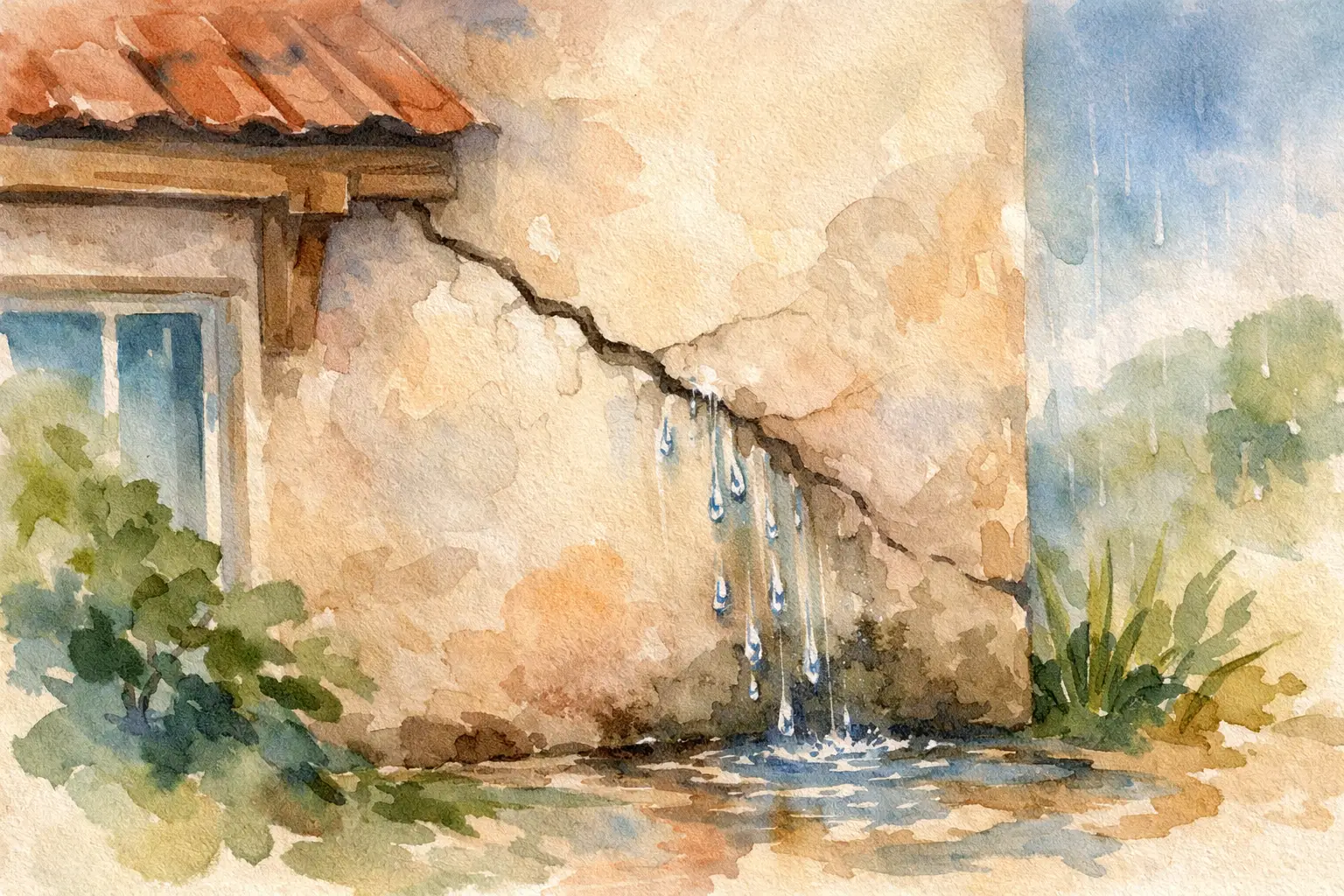
A hairline crack in external render can look harmless from the ground. However, if you are asking, “can cracked render let water in?”, the answer is yes. Cracked, loose or failing render can allow rainwater to reach the wall behind it, particularly during wind-driven rain that is common across Glasgow and Central Scotland. The right repair depends on the type of crack, the condition of the wall, and whether moisture has already started causing damage indoors.
Render is not simply a decorative finish. It forms part of your home’s weather protection, helping to keep brickwork or blockwork dry while giving the exterior a clean, uniform appearance. Once that protective layer is compromised, water can find its way through even small openings.
Can cracked render let water in?
Yes, but not every crack will cause an immediate leak. Fine surface crazing in an older render coating may be cosmetic, while a deeper crack can extend through the full render depth and create a direct route for rainwater. The risk rises where cracks are around windows, doors, rooflines, pipes, extensions, chimney breasts or changes in wall material.
Rain does not need a large gap to cause trouble. Water is pushed into cracks by wind, then can sit behind the render where it is slow to dry out. Over repeated wet weather, the wall may become saturated. This can lead to damp patches, blown plaster, peeling paint, mould growth and a cold feel on internal walls.
In winter, trapped water can freeze and expand. That movement widens existing cracks and may cause sections of render to loosen or fall away. What begins as a small repair can then develop into a larger rendering, roughcasting or masonry repair project.
Why render cracks develop
External render moves over time. Buildings settle, materials expand and contract with changing temperatures, and older walls can flex slightly. Small cracks are therefore not unusual, especially on properties with ageing cement render.
The cause still matters. A repair that only covers the visible line may fail quickly if movement or moisture is continuing behind it. Common causes include poor original application, inadequate preparation, unsuitable render mix, failed sealant around openings, water overflowing from blocked gutters, leaking downpipes, or moisture entering at roof level.
Structural movement is less common, but should never be ignored. Cracks that are wide, stepped through masonry, repeatedly reopening, or accompanied by sticking doors and windows need proper assessment. In that situation, the render may be showing a wider issue with the building rather than being the problem itself.
Hairline cracks versus serious defects
Hairline cracks are often narrow and shallow. They may appear as a network of fine lines, particularly on rendered elevations exposed to sun, frost and rain. If the render remains firmly bonded to the wall and there are no signs of damp indoors, a local repair and protective coating may be sufficient.
More serious defects usually show clearer warning signs. These include cracks wider than a few millimetres, render that sounds hollow when lightly tapped, bulging areas, staining below a crack, crumbling edges, or patches that are visibly loose. A vertical crack beside a window or a horizontal crack below a roofline can also point to water being directed onto the wall from elsewhere.
Do not assume the size of the crack tells the whole story. A narrow crack in an exposed gable wall can admit more water than a wider crack on a sheltered elevation. The age of the property, wall construction and the direction the wall faces all affect the level of risk.
Signs water may already be getting through cracked render
External damage is often noticed first, but indoor symptoms can confirm that water is penetrating the wall. Look for damp marks or discolouration on internal walls, flaking paint, wallpaper lifting, mould near external corners, or plaster that feels soft or powdery.
A musty smell in a room can be another indication, particularly after prolonged rainfall. Condensation can cause similar symptoms, so it is worth having the source checked rather than guessing. Treating an indoor wall with paint or mould cleaner will not solve a leak through defective render.
Outside, look for green algae, black streaking, white salt deposits, rust marks around fixings, or render that remains dark long after dry weather. These are all signs that the surface is holding excessive moisture or that water is getting behind the finish.
What happens if you leave cracked render unrepaired?
The immediate concern is water ingress, but the longer-term cost can be higher. Moisture trapped behind render can damage brickwork, mortar joints and internal finishes. On timber-framed areas, around bays or beneath rooflines, persistent damp can also affect timber components.
There is a safety issue where render is detached from the wall. Loose pieces can fall without much warning, especially after frost or heavy rain. This is particularly important around entrances, paths, driveways and public-facing commercial premises.
There is also an energy-efficiency consequence. Damp walls lose heat faster than dry ones, making rooms more difficult and expensive to warm. Repairing the external envelope early helps protect the building fabric and avoids spending money repeatedly decorating a wall that is still getting wet.
The right way to repair cracked render
A dependable repair starts with identifying why the crack appeared. An experienced contractor will inspect the render, surrounding masonry, roofline, flashings, gutters and downpipes, as water from above is often the cause of a defect lower down the wall.
For isolated hairline cracks, the area may be opened out carefully, cleaned, filled with a compatible flexible repair material and finished to match the surrounding texture. The repaired section should then be allowed to cure correctly before any suitable protective coating is applied.
Where render has debonded, hollowed or broken down across a wider area, patching may not be the best value. Loose material needs to be removed back to a sound edge, the background checked and prepared, and new render applied in suitable layers. Matching an older roughcast or textured finish takes practical experience, particularly where a patch sits on a prominent front elevation.
If damage is widespread, full re-rendering or roughcasting may offer a more reliable result than multiple small repairs. It costs more upfront, but can provide consistent weather protection and appearance across the entire wall. The correct option depends on the condition of the existing finish, not simply on what is quickest to apply.
Do not seal over a damp wall
Water-repellent coatings and exterior paint can have a place, but they are not a cure for loose render, active cracks or hidden leaks. Applying a coating over a wet wall can trap moisture and make later failures harder to diagnose.
The wall must first be made sound and allowed to dry. Any defective guttering, roof tiles, leadwork, sealant or flashings contributing to the issue should be repaired at the same time. This joined-up approach is often what prevents the same damp patch returning a few months later.
When to arrange a professional survey
Arrange an inspection promptly if you can see loose render, notice damp inside after rain, find cracks around windows or roof level, or spot staining on an external wall. It is also sensible to obtain advice before buying a property with extensive cracking or before carrying out internal refurbishment work.
A clear survey should explain the likely source of the defect, the condition of the render and surrounding building elements, and whether a local repair is appropriate. It should not pressure you into replacing sound render simply because a small crack is visible.
First Roofing & Building provides practical exterior inspections and repair advice for homeowners, landlords and commercial property owners across Glasgow and Central Scotland. With roofing, guttering, roughcasting, rendering and wider building work under one team, the underlying route of water ingress can be assessed rather than simply covered up.
If cracked render is visible on your property, act before the next prolonged spell of rain turns a manageable external repair into internal damp damage. A proper survey and a well-matched repair will protect the wall, preserve the appearance of your property and give you confidence that water is being kept where it belongs – outside.