
Single Ply Membrane Review for Flat Roofs
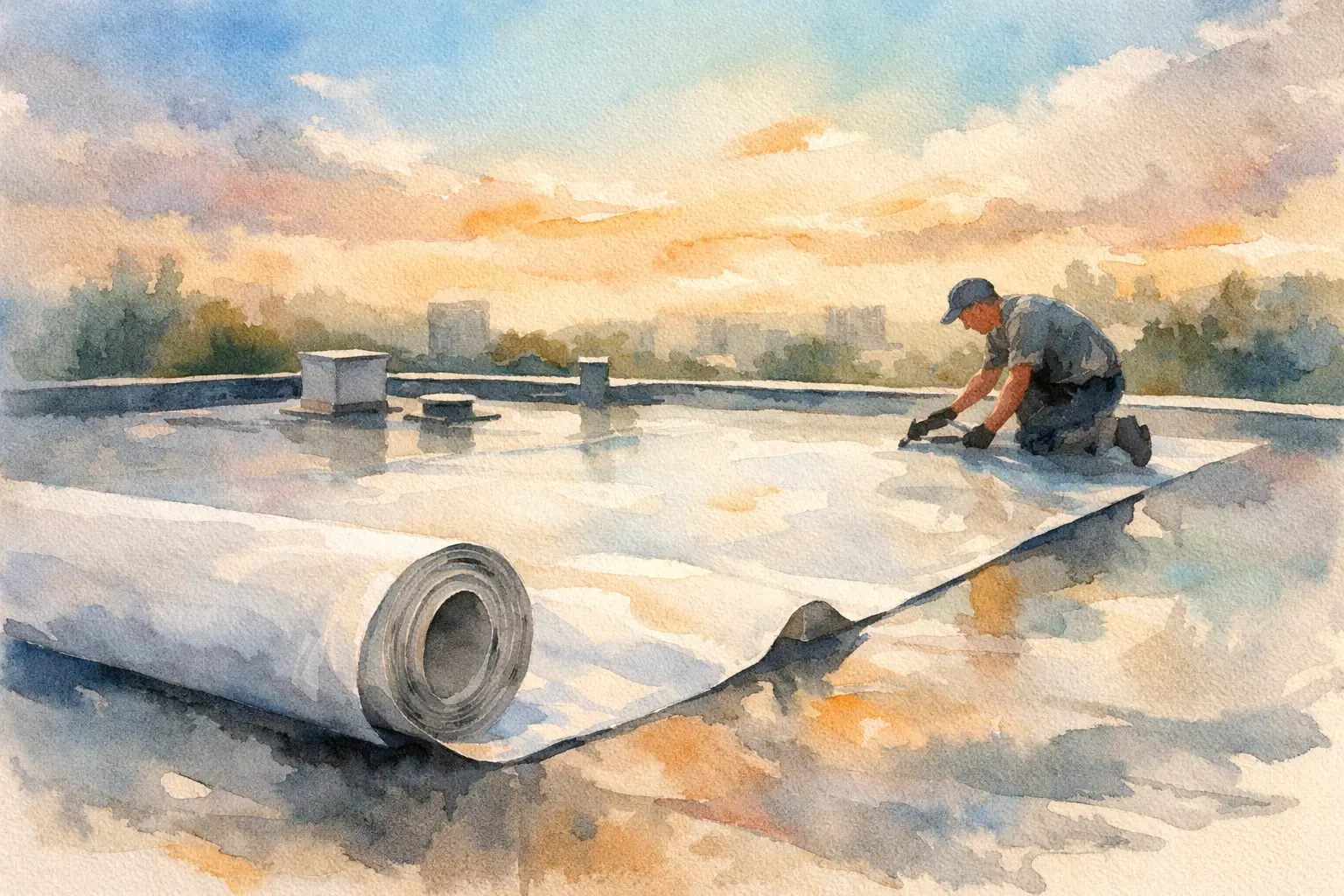
A flat roof that holds standing water after a Glasgow downpour, splits around an outlet or leaks at an upstand is not a minor inconvenience. Water can quickly damage insulation, timber decking, ceilings and internal finishes. This single ply membrane review explains where this type of roofing performs well, where the limitations lie and what should be checked before committing to a replacement.
Single-ply roofing is a proven choice for many domestic extensions, garages, commercial premises and larger flat-roof areas. The material itself is only one part of the job, however. A durable result depends just as much on the roof design, insulation, drainage details and standard of installation.
What Is a Single-Ply Membrane?
A single-ply membrane is a factory-made waterproof sheet used to form the weatherproof layer on a flat or low-pitched roof. Rather than building up several layers of felt and bitumen on site, the roof is covered with a membrane that is mechanically fixed, adhered or ballasted, depending on the system and roof structure.
Common single-ply materials include PVC and TPO. EPDM rubber is also often discussed alongside single-ply systems, although its installation methods and jointing details differ. Each option can be effective when it is specified properly for the building.
For property owners, the main attraction is straightforward: a correctly installed membrane provides a clean, lightweight and watertight finish with fewer site-applied layers. It is particularly well suited to broad, uncomplicated roof areas, though it can also be carefully detailed around rooflights, vents, parapet walls and drainage outlets.
Single Ply Membrane Review: The Main Benefits
The strongest argument for single-ply roofing is its reliable waterproofing performance. Modern membranes are designed to remain flexible through changing temperatures, resist UV exposure and cope with frequent rain. That matters in Central Scotland, where a flat roof may face prolonged wet weather, wind-driven rain and repeated freeze-thaw cycles in the same season.
Installation can also be efficient. Large membrane sheets cover more area with fewer laps than traditional felt systems. Seams are generally heat-welded on PVC and TPO roofs, creating a consistent bond when completed by experienced roofers. This can reduce potential weak points, but only if the welding is carried out accurately and tested during installation.
Single-ply systems are comparatively lightweight. This can be useful on extensions, garages and commercial buildings where the existing structure has limited capacity for heavier coverings. It can also be a practical option when improving thermal performance, as the membrane can form part of a warm-roof build-up with rigid insulation beneath it.
A well-designed membrane roof is also easy to inspect. Small punctures, lifted edges and blocked outlets are usually visible to a trained eye, which helps make planned roof maintenance more effective. Early repairs are far less disruptive than waiting for moisture to travel into the roof build-up.
The Trade-Offs to Consider Before Choosing It
No roofing material is maintenance-free or suitable for every project. Single-ply membranes can be punctured by sharp objects, careless trades or poorly protected foot traffic. Roofs with regular access for plant maintenance, solar equipment or building services may need designated walkways and additional protection.
The finished appearance can be more functional than decorative. For a hidden flat roof, this is rarely a concern. On a highly visible roofline, some homeowners may prefer the look of lead, zinc or another architectural finish. The right choice depends on the property, budget and how prominent the roof is from ground level.
Detailing is critical. Most membrane failures happen at edges, corners, penetrations, outlets and wall junctions rather than in the middle of the roof. A low quote that overlooks new trims, insulation, vapour control layers, proper drainage or repairs to damaged decking can become expensive later.
There is also no meaningful lifespan figure without context. The membrane type, exposure, maintenance, installation quality and whether the roof is used all affect longevity. A professionally installed system with appropriate drainage and periodic inspections should give many years of dependable service. A poorly prepared roof with ponding water and weak edge details may fail much sooner, whatever material is used.
Is PVC, TPO or EPDM the Better Choice?
PVC membranes have a long track record on commercial flat roofs. They are commonly heat-welded, offer strong resistance to weathering and can be detailed effectively around complex features. They are often a sensible choice where there are numerous roof penetrations or a large area requiring carefully welded seams.
TPO is another heat-weldable membrane and is valued for its flexibility and reflective surface options. It is frequently used on commercial and modern residential projects. As with any roofing system, the quality of the individual product and installer matters more than choosing a material by name alone.
EPDM is a synthetic rubber membrane, usually black, that is widely used on domestic garages, extensions and outbuildings. It has fewer seams on smaller roofs and can be a cost-effective, durable solution. It is not necessarily the right answer for every roof, especially where complex detailing or a specific finish is required.
The better choice is the one that suits the roof. A free survey should assess the deck condition, falls, drainage, insulation requirements, roof access, existing defects and the number of details that need to be formed. A reliable contractor will explain why a particular system is being recommended rather than treating every flat roof the same.
What a Proper Installation Should Include
Replacing the visible membrane without dealing with the structure beneath it is a false economy. Before work begins, the existing roof should be inspected for wet insulation, rotten timber, loose decking, inadequate falls and failed drainage outlets. If moisture has entered the build-up, simply covering it over can trap problems below the new roof.
On most replacement projects, the roof deck is repaired or renewed where necessary, a vapour control layer is fitted where required, insulation is installed to the correct specification, and the membrane is then laid and detailed. Perimeter trims, flashings, upstands and outlets must be compatible with the chosen system.
Drainage deserves particular attention. Flat roofs are designed with a slight fall, not a perfectly level surface. Water that remains around an outlet after rain can indicate a blockage, poor falls or local deflection. Occasional shallow ponding may not always cause immediate failure, but it should never be ignored on a roof that is already showing signs of age or leakage.
For commercial roofs, installation records, photographs and checks to welded seams provide valuable reassurance. For homeowners, clear information about the roof build-up, workmanship guarantee and maintenance needs is equally useful. You should know what has been installed and how to spot a developing issue.
Cost: What Affects the Price?
It is tempting to compare flat-roof quotes solely by square metre rate, but the area of the roof is only one factor. The overall price is shaped by access, scaffolding, removal of the existing covering, condition of the deck, insulation thickness, drainage alterations, rooflights, parapet walls, vents and the complexity of edge details.
A simple detached garage roof with good access is very different from a rear extension above a conservatory, or a commercial roof requiring safe access and work around air-conditioning plant. The cheapest quotation may exclude elements that are essential to a long-lasting result.
Ask for the proposed membrane type, method of fixing, insulation allowance, edge and drainage details, and whether repairs to the deck are included if found during the work. Clear scope prevents misunderstandings and makes quotations easier to compare fairly.
When Single Ply Is a Strong Choice
Single-ply roofing is often an excellent option for extensions, dormers, garages, workshops, blocks of flats, offices and retail premises. It is particularly effective where a lightweight waterproof finish, improved insulation and neat detailing are needed without adding unnecessary load to the structure.
It may be less suitable where the roof is heavily trafficked without protection, where there are unresolved structural movement issues, or where a traditional finish is required for conservation or visual reasons. In those cases, another roofing approach may offer better value and a more appropriate appearance.
For property owners in Glasgow, Kirkintilloch and across Central Scotland, the practical question is not simply whether a membrane is good. It is whether the proposed system addresses the exact reason the existing roof has failed. First Roofing & Building can inspect the roof, explain the options in plain terms and provide a clear quote for the work required.
A flat roof should not be left until the stain on the ceiling grows or the deck begins to soften. Arrange an inspection when you first notice pooling water, cracked seams, lifted edges or internal damp, and make the next repair or replacement decision with the full condition of the roof in view.