
Sandstone Restoration Before After Results
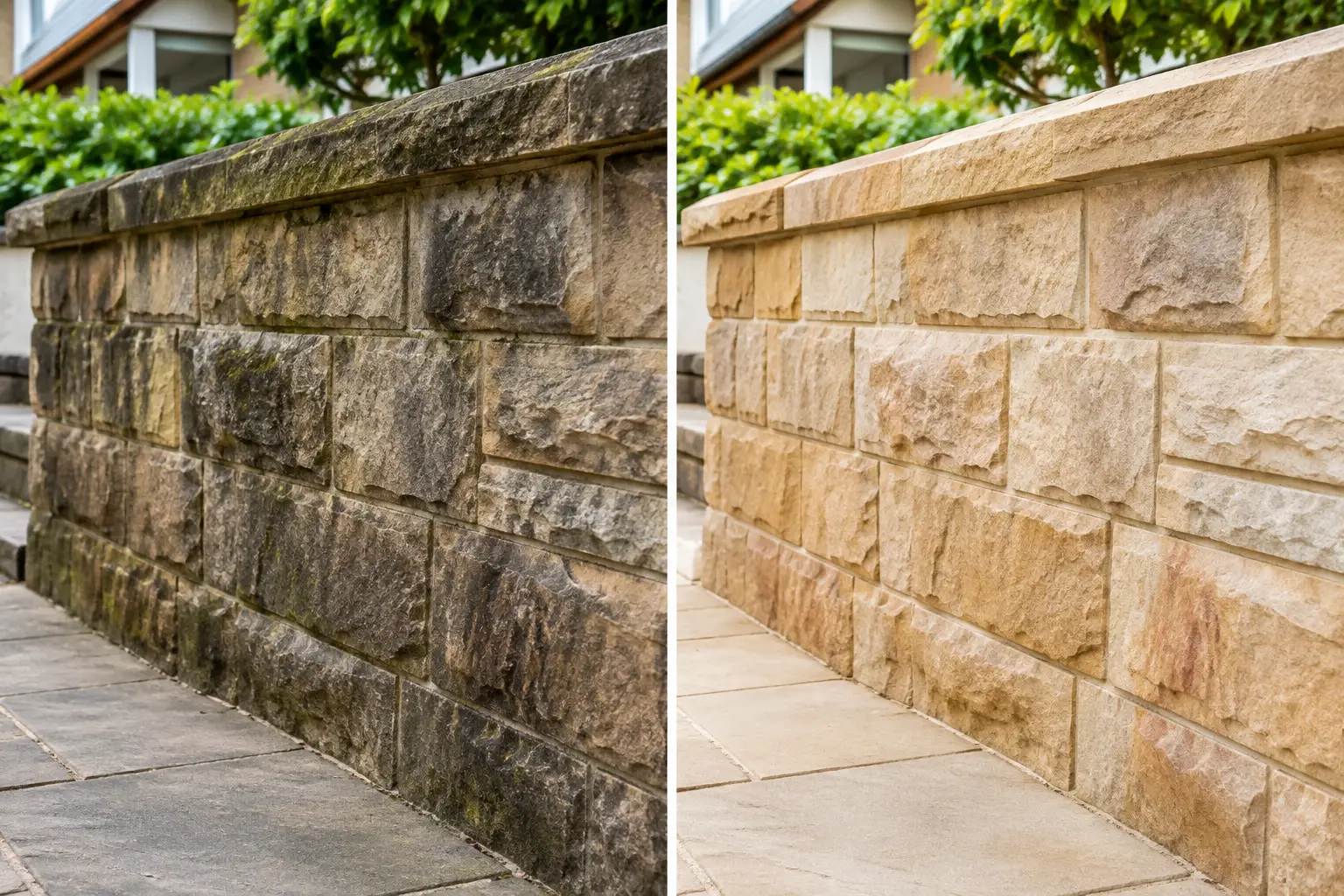
A tired sandstone frontage can make an otherwise well-kept property look neglected. Dark staining, open joints, crumbling edges and patched repairs often lead owners to search for sandstone restoration before after examples. The striking change is not simply a cleaner-looking wall. Done properly, restoration removes the causes of deterioration, protects the building fabric and brings back the character that made sandstone properties so desirable in the first place.
For homes, tenements and commercial premises across Glasgow and Central Scotland, the best results come from a careful survey and the right repair methods – not from aggressive cleaning or quick cosmetic patching.
What a genuine sandstone restoration before after change looks like
The ‘before’ condition is rarely just surface dirt. Scotland’s weather, driving rain, frost, pollution and years of unsuitable maintenance can all take their toll on natural stone. You may see black biological growth, white salts, cracks around windows, loose mortar, spalled stone faces or areas previously filled with hard cement.
The ‘after’ should look cleaner, sounder and more consistent, but it should not look artificially new. Sandstone has natural variation in tone, texture and weathering. A skilled restoration retains that character while repairing defects that could allow water further into the wall.
A successful finished job usually shows tight, breathable pointing, repaired or replaced damaged stone, properly formed joints around openings and a façade free from unstable material. The improvement is visual, but the real value is in preventing continued water damage and costly repairs later.
Why sandstone deteriorates
Sandstone is porous. It is designed to manage moisture through the wall, particularly in traditional solid-wall properties. Problems begin when moisture becomes trapped, or when damaged joints and defective rainwater goods allow excessive water to soak into the stonework.
Hard cement pointing is a common issue on older buildings. It can force moisture to escape through the softer sandstone rather than through the mortar joints. Over time, the face of the stone may break down, flake away or develop deep erosion. This is often seen on chimney stacks, bay windows, boundary walls and exposed gable elevations.
Poorly directed water also matters. A leaking gutter, broken downpipe or failed flashing can saturate one localised area and create stains that return even after cleaning. That is why exterior repairs should be considered together. There is little sense restoring an elevation if a roofline fault is still pouring water onto it.
The restoration process behind the before-and-after images
Every property needs its own scope of work. A light clean and local repointing may be enough for one wall, while another requires stone indents, replacement blocks and repairs to surrounding render, gutters or leadwork. A proper survey establishes the condition of the stone and identifies what is causing the damage before work begins.
Careful cleaning, not harsh treatment
Cleaning is often the most visible stage, but it should never be treated as a shortcut. The aim is to remove atmospheric staining, algae and dirt without stripping the stone surface or driving water deep into the wall.
The right method depends on the sandstone type, the level of soiling and the building’s condition. In many cases, controlled low-pressure washing and appropriate cleaning products are preferable to harsh blasting. Abrasive methods can scar the stone, expose softer material and leave a patchy finish that ages badly.
Testing a small area first gives a clearer indication of how the stone will respond. This is particularly useful where a property has mixed repairs or heavily weathered original blocks.
Raking out failed mortar and repointing
Open or cracked joints let rain penetrate behind the stone face. Old loose mortar is carefully removed to a suitable depth, then the joints are repointed with a compatible mortar. For many traditional sandstone buildings, that means a lime-based mortar rather than a hard cement mix.
Lime mortar remains more flexible and breathable. It allows the wall to release moisture in the way older construction was intended to work. The colour, aggregate and joint profile should also be chosen to suit the existing building, as poorly matched pointing can be just as noticeable as damaged stone.
Stone repairs and replacement indents
Not every damaged area needs a complete new block. Where deterioration is limited, a carefully matched repair may restore the profile and stop further loss. More seriously decayed sections may need to be cut out and replaced with a new sandstone indent selected to match the original stone as closely as practical.
The repair needs to do more than blend in on the day it is completed. It must be securely bedded, correctly jointed and able to weather alongside the surrounding masonry. New stone can initially appear lighter than aged stone, but it will naturally tone down over time. Honest workmanship aims for a sympathetic match, not a false promise of perfectly identical colour from day one.
What affects the final result and cost
There is no reliable fixed price for sandstone restoration based only on a photograph. Access, height, the extent of decay, stone matching requirements and the amount of pointing all affect the work involved. Scaffolding may be required for upper-storey façades, chimneys or difficult-to-reach gables, and this forms an important part of planning the job safely.
The size of the repair is not always the best measure of its complexity. A small area around a window head can require careful support, precise cutting and several stages of finishing. Conversely, broad areas of straightforward repointing may be less technically demanding but take longer because of the overall coverage.
Property owners should be cautious of quotes that offer only a quick clean when the stone is visibly failing, or that suggest covering defects with paint or sealant. Some protective treatments have a place in the right circumstances, but sealing a wall without resolving water ingress and mortar problems can worsen trapped-moisture issues.
Before work starts: signs you should not ignore
Early action can preserve more of the original stone and keep the repair scope manageable. Arrange an inspection if you notice mortar falling from joints, stone faces flaking or breaking away, damp patches on internal walls, staining beneath gutters, cracks around openings or vegetation growing from joints.
Loose masonry should be dealt with promptly, especially above entranceways, pavements and shared access areas. On commercial buildings and tenements, there is also a responsibility to keep elevations safe for residents, visitors and the public.
Photographs are useful when requesting an initial estimate, but a site visit is the only dependable way to assess depth of damage, access requirements and the condition of connected roofline features. A clear scope should explain which areas will be cleaned, repointed, repaired or replaced, rather than relying on vague promises to ‘restore’ the whole elevation.
Protecting restored sandstone for the long term
Once restoration is complete, routine maintenance makes a real difference. Keep gutters and downpipes clear, repair slipped slates or damaged flashings quickly, and check high-level masonry after severe weather. Water should be carried away from the wall, not allowed to run repeatedly down the same section of stone.
Avoid painting sandstone or applying untested coatings as a cosmetic fix. If a wall looks damp or stained again, find the source of the moisture before treating the visible symptom. Regular inspections are particularly worthwhile for older properties with chimneys, parapets, bay windows and ornate stone details.
First Roofing & Building provides practical exterior repairs for property owners who need sandstone work considered alongside roof, guttering and wider building issues. A thorough survey gives you a realistic view of what is needed, what can be retained and where early repairs will protect your property most effectively.
The strongest sandstone restoration before-and-after result is one that still looks right years later: sound stone, breathable joints, controlled water flow and a building that is ready for the next spell of Scottish weather.