
Roof Inspection Checklist Review for UK Homes
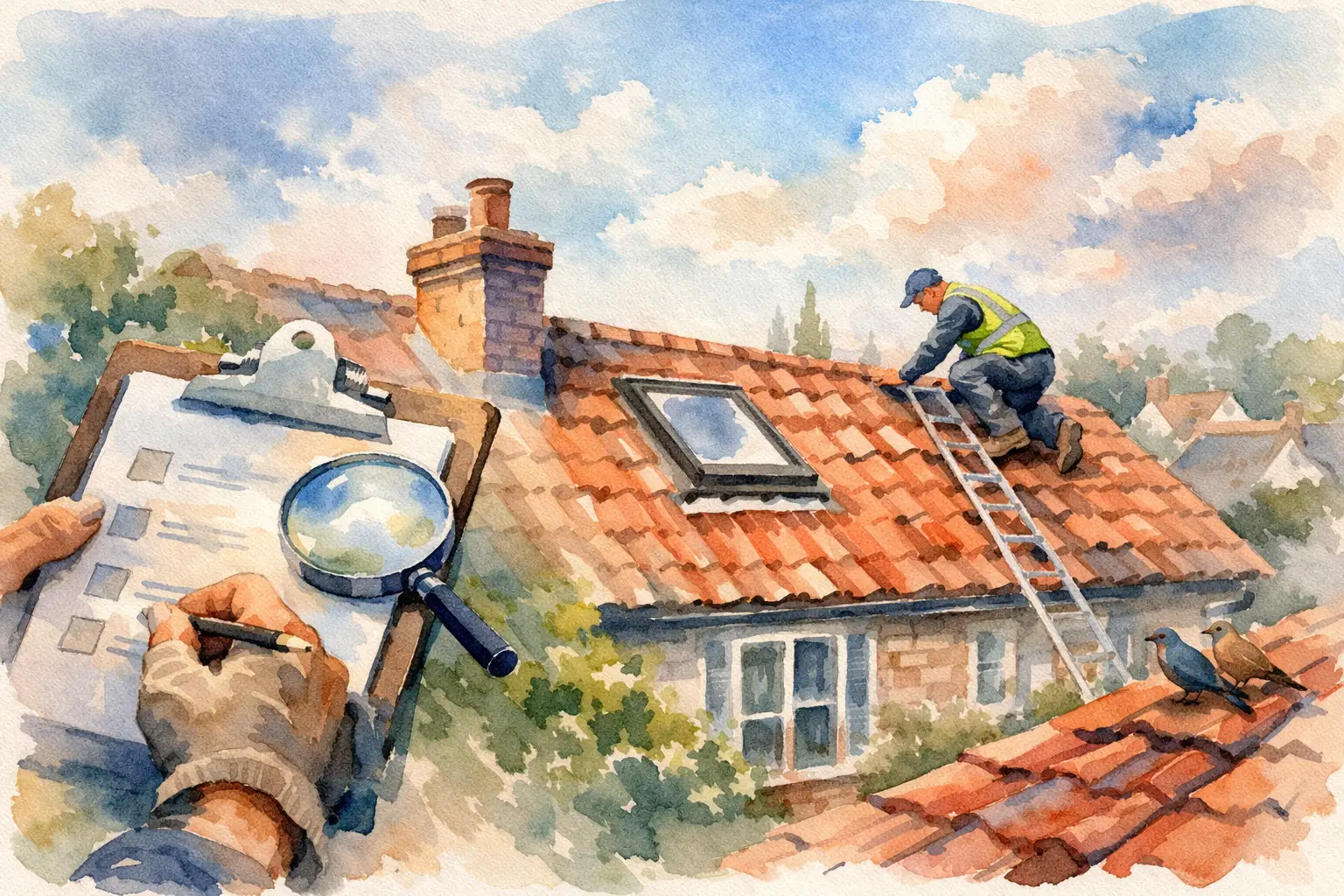
A roof can look perfectly sound from ground level while water is tracking beneath a slipped tile, failed flashing or cracked flat-roof seam. This roof inspection checklist review explains what a proper survey should examine, why each point matters, and when a small defect needs prompt action rather than another winter of waiting.
For homeowners, landlords and commercial property managers, a roof inspection is not simply a search for visible leaks. It is a practical assessment of the roof covering, drainage, roofline, structure and vulnerable junctions where water commonly gets in. In Glasgow and across Central Scotland, wind, persistent rain, frost and moss growth can turn a minor weakness into a more expensive repair surprisingly quickly.
What a Professional Roof Inspection Should Cover
A worthwhile inspection begins with the whole property, not just the area where a stain has appeared indoors. Water can travel along timbers, felt or masonry before it becomes visible on a ceiling, so the source may be some distance from the symptom.
A competent roofer will assess the roof safely from the ground and, where access allows, at close range. The findings should be explained clearly, with straightforward advice on whether work is urgent, advisable in the near future or simply something to monitor.
Roof Covering: Slates, Tiles and Flat Roof Materials
The main roof covering is the first line of defence against the weather. On a slate or tiled roof, the survey should identify cracked, broken, loose, missing or poorly fitted units. Particular attention is needed around the lower edges, ridges, hips and verges, as these are exposed areas that can be affected by wind uplift.
With older Scottish roofs, nail corrosion can also be a concern. A slate may remain intact but start to slip because its fixing has failed. Repeatedly replacing individual slates can be sensible when the overall roof is in good condition. If failures are widespread, however, it may indicate that a more substantial repair or replacement should be considered.
Flat roofs need a different approach. Whether the surface is felt, single-ply membrane, lead or another system, an inspection should look for splits, blisters, open laps, ponding water, damaged edges and failed seals around roof penetrations. Standing water does not always mean immediate failure, but it should be assessed. On a correctly formed roof, drainage should not be left to chance.
Flashings, Valleys and Abutments
Most roof leaks occur at details rather than in the middle of the roof slope. Flashings around chimneys, dormers, roof windows, soil pipes and wall junctions must direct water away cleanly. Leadwork should be correctly dressed, securely fixed and free from splits, lifting or inappropriate patch repairs.
Valleys deserve close inspection because they carry a high volume of rainwater. Debris, cracked valley lining, displaced slates and failing mortar can all restrict drainage or allow water beneath the roof covering. A small fault in a valley can affect a large area of the roof structure during heavy rain.
Chimney stacks should be checked as part of the same review. Loose pointing, damaged render, cracked pots and deteriorated flaunching can all create hazards or contribute to water ingress. In some cases, the right repair involves both roofing and building work rather than treating one visible defect in isolation.
Roof Inspection Checklist Review: Drainage and Roofline
Gutters, downpipes, fascias and soffits are easy to overlook until water starts overflowing down external walls. Yet they are central to protecting brickwork, render, roughcast, foundations and roof timbers.
A proper review should check that gutters are securely fixed, correctly aligned and clear enough to carry water to the downpipes. Moss, leaves and silt can cause blockages, while joints and stop ends can fail as materials age. Water spilling over a gutter may look like a maintenance nuisance, but constant overflow can saturate external walls and worsen damp problems.
UPVC roofline should be inspected for gaps, loose sections and signs that water is reaching the timber behind it. Timber fascias and soffits require even closer attention for rot, peeling paint and movement. Replacing a damaged section before it affects rafter ends is usually far more cost-effective than leaving it until structural timber repairs are required.
What to Check Inside the Roof Space
An external inspection tells only part of the story. Where it is safe and access is available, the loft or roof void can reveal whether the roof is performing as it should.
The survey should look for damp staining, active drips, wet insulation, mould, daylight showing through the roof covering and signs of timber deterioration. Roof timbers may show staining from an old leak that has already been repaired, so a professional should distinguish historic marks from active moisture where possible.
Ventilation matters too. Condensation in a loft can be mistaken for a roof leak, especially in colder months. Poor airflow, blocked eaves ventilation and inadequate insulation arrangements can leave moisture on timbers and roofing felt. The solution may be ventilation improvement rather than an unnecessary roof repair. This is why a diagnosis should come before a quote for major work.
For commercial properties, inspection may also include ceilings, internal drainage points, parapet walls, roof access areas and plant penetrations. Flat commercial roofs often have more service penetrations than domestic roofs, creating additional joints that must remain watertight.
Warning Signs That Should Not Wait
Some roof issues can be scheduled for routine maintenance. Others need rapid attention to limit damage to the building. Contact an experienced roofer promptly if you notice any of the following:
- Water dripping indoors or a ceiling stain growing after rainfall
- Slates or tiles on the ground, especially after high winds
- A visibly sagging roofline, loose ridge materials or damaged chimney masonry
- Water pouring over gutters or running down the face of external walls
- Bubbling plaster, damp smells in the loft or wet insulation
Do not climb onto the roof to investigate. Wet surfaces, loose materials and hidden weak points make roof access dangerous, particularly after a storm. Clear photographs from ground level can be helpful, but a safe professional inspection is the right next step.
How Often Should a Roof Be Inspected?
For most homes, an annual visual check and a professional inspection every one to two years is a sensible starting point. Older roofs, properties surrounded by mature trees, buildings exposed to open wind, and roofs with known past repairs may benefit from more frequent attention.
An inspection is also advisable after severe weather. Scotland’s wind and heavy rain can dislodge tiles, lift flashing and fill gutters with debris without creating an immediate internal leak. Finding the issue early gives you more control over the repair and helps prevent emergency call-outs later.
Landlords and commercial property operators should keep a clear record of inspections and maintenance. This supports planned budgeting and provides useful evidence that the property has been managed responsibly. For a buyer, a pre-purchase roof inspection can be equally valuable. It may identify likely repair costs before contracts are finalised, particularly on older slate roofs or properties with flat-roof extensions.
When Repair Is Enough and When Replacement Makes Sense
A roof inspection should not automatically lead to a replacement recommendation. Isolated broken tiles, minor flashing defects, leaking gutters and localised flat-roof damage can often be repaired effectively when the wider roof remains sound.
Replacement becomes more reasonable when defects are repeated across the roof, materials are near the end of their expected service life, or repairs are becoming regular and costly. The decision depends on the condition of the roof, not just its age. A well-maintained slate roof can last for many decades, while a newer roof may need early intervention if installation details were poor.
Ask for a clear explanation of the options. A dependable contractor should set out what needs urgent attention, what can be planned, and what work will protect the property for the long term. First Roofing & Building provides roof inspections and practical repair advice for domestic and commercial properties throughout Glasgow and the surrounding area, with workmanship built around lasting results.
A roof inspection is most valuable before a leak becomes part of the building. If you have noticed a slipped slate, overflowing gutter, damp patch or storm damage, arranging a professional survey now can protect your property, your budget and your peace of mind.